
OHLCX Blog
Category: General
-

TSP (Trailing-Stop Protection): Discipline When Price Moves in Your Favorable Direction
TSP-style trailing protection locks in favorable drift without static stops: calibration, partials, OCO hygiene, Risk Gauge heat, live execution realism.
-

OTOCO and Contingent Logic for Multi-Step Entries
OTOCO contingent orders encode multi-step entries: sequencing, partial fills, TRIM/TSP hooks, Risk Gauge checks, Strategy Builder safeguards, live realism.
-

OCO Exits: When Paired Profit and Stop Orders Actually Help
OCO pairs help when profit and stop are truly mutually exclusive-verify partials, reconnects, and heat because gaps and correlation outrun symmetric brackets.
-
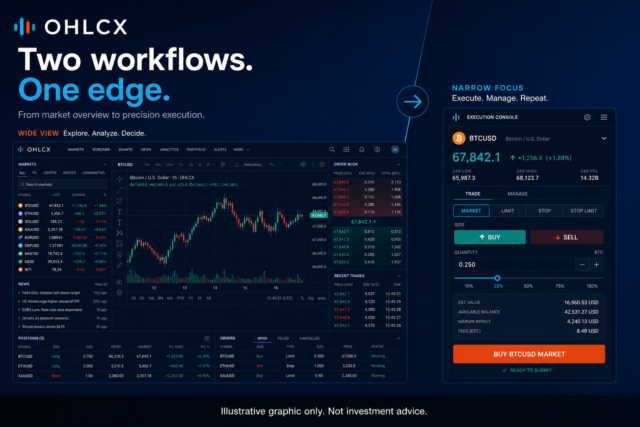
Broker-Native Tools vs a Dedicated Execution Layer
Broker-native tickets vs a dedicated execution layer: when OCO, OTOCO, heat checks, and structured entry justify OHLCX-style specialization.
-

Structured Order Entry: Reducing Fat-Finger Risk at Scale
Structured order entry reduces fat-finger errors at scale: validated tickets, linked trims, heat awareness, calmer live execution for active traders.
-

Trade Execution Workflow: From Signal to Live Order Without Rework
Cut trade rework with a signal-to-send workflow: briefs, OCO/OTOCO, trims, heat checks, and templates aligned with OHLCX execution-first habits.
-

Why Execution-First Workflow Beats Another Indicator Stack
Execution-first workflow beats stacking indicators: align live tickets, structured order entry, and portfolio heat so research turns into consistent risk.
-
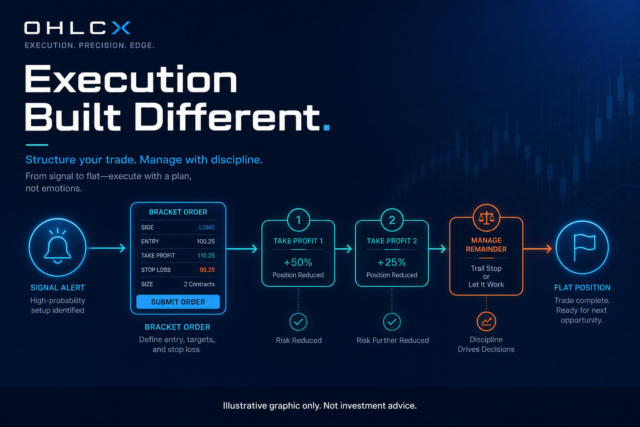
Trade Execution Workflow: Why the Ticket Is the Real System
A trade execution workflow connects structured entries, paired exits, and portfolio heat-going beyond indicators and journaling for active traders.