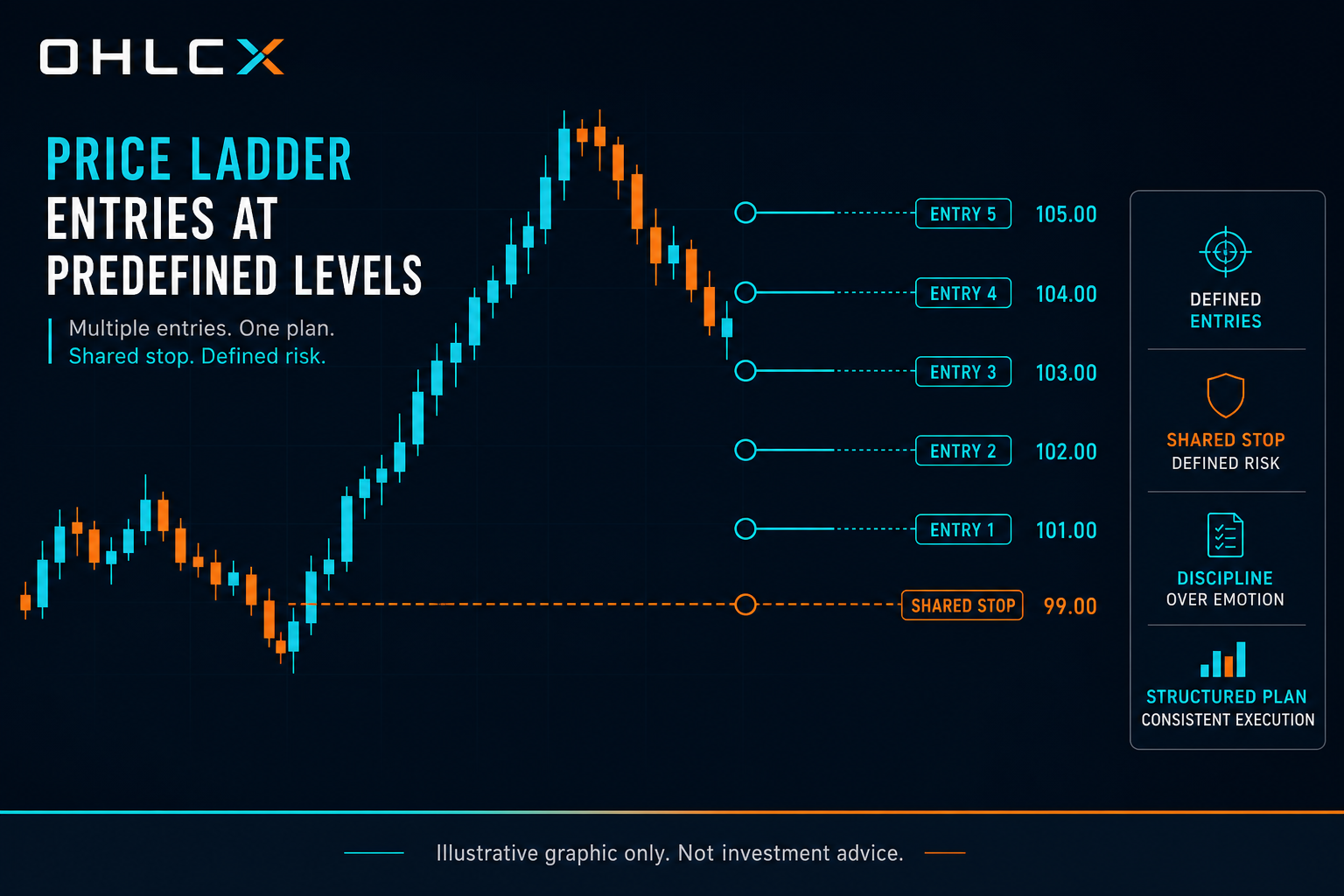
Scaling in can be a disciplined way to build a position. It can also become averaging down with a better name. The difference is whether the plan was written before the first fill.
A real scaling plan defines where the first entry belongs, when additional size can be added, how much total risk the trader is willing to carry, and where the entire idea is invalidated. It also respects liquidity. A ladder that looks clean in a spreadsheet may behave very differently when the book is thin, spreads are wide, or only part of the order fills.
The danger is not the act of adding. The danger is adding because the first tick went against the trader and discomfort starts rewriting the plan.
OHLCX supports this part of the workflow by giving traders a Schwab-connected place to build structured orders, review risk, choose exits before send, and use optional rule-based automation when a setup is repeatable. It does not decide whether a scale plan is good. The trader still owns the thesis, the risk, and the decision to add.
What makes scaling different from averaging down?
Scaling in is planned before the trade starts. Averaging down is often justified after the trade starts hurting.
That distinction matters. A trader who scales in may begin with partial size because the setup allows staged confirmation. The next add might require a structural retest, a volatility condition, a time gate, or a specific liquidity read. The total size is capped. The invalidation point is known. The trader knows what would stop the sequence.
Averaging down usually works backward. The first entry goes against the trader, and the add becomes a way to improve average price or reduce emotional pressure. The trader may tell themselves they are being patient, but the real driver is often the need to make the position feel less wrong. The market does not care which label the trader uses. It only reflects the account’s actual exposure.
A scale plan becomes risk architecture when the add rules, total exposure, and abort conditions exist before price tests the trader’s patience.
What should a scaling plan define before the first order?
A scaling plan needs more than a rough idea of “I’ll add if it dips.” Before the first order goes live, the trader should define:
- The maximum position size or capital commitment
- The maximum risk allowed if the full ladder is built
- The specific conditions that allow each add
- The spacing logic between entries, whether price-based, volatility-based, structural, or time-based
- The invalidation point that cancels the remaining ladder
- The exit plan for partial fills, full fills, and failed adds
- The liquidity conditions required for the plan to remain valid
This is where many scale plans break down. The trader may define entry levels but fail to define what happens if only the first level fills, if the second level partially fills, or if liquidity disappears before the planned third add.
OHLCX can support the planning process by keeping order structure, exit flows, and Risk Gauge visibility closer to the ticket. The platform does not replace the plan, but it can help the trader see whether the next add still fits the account’s risk state.
Build the ladder around risk, not comfort
A scaling ladder should not be designed around making the trader feel better after a poor first fill. It should be designed around how much risk the setup deserves if the full position is built.
That means the risk cap comes first. If the trader is willing to risk a defined dollar amount or account percentage on the full idea, each add has to fit inside that limit. A small first entry does not make later adds harmless. The risk compounds as the ladder fills.
This becomes more important when the add levels are close together. If the trader adds too quickly, the position can reach full size before the setup has truly developed. If the trader adds across correlated names at the same time, the account may become more exposed to one theme than the individual tickets suggest.
Risk Gauge visibility can help keep that broader view in front of the trader. A scale plan may look reasonable on one chart while the account is already carrying similar exposure elsewhere.
The question is not only, “Can I add here?” It is, “If this entire ladder fills, is the total risk still acceptable?”
Liquidity decides whether the ladder is realistic
A scaling plan has to respect the market it is trading. Thin books can punish clustered limit orders. Fast tapes can move through planned levels before the trader can verify what filled. Options contracts with limited volume can leave the trader with partial fills that make the next add less clean than expected.
That does not mean scaling should be avoided. It means the ladder should be built around realistic execution conditions.
Before scaling aggressively, the trader should understand the spread, depth, volume, and typical slippage for the instrument. If the setup depends on clean fills, but the book cannot support the intended size, the plan may need smaller clips, wider spacing, or fewer adds.
OHLCX’s Asset Detail view can support that context by keeping chart information, options data, Level 2 depth, technical indicators, instrument details, and the order ticket closer together. More information does not guarantee better execution, but it can help the trader decide whether the ladder is practical before sending the next order.
How should partial fills change the scale plan?
Partial fills are not small administrative details. They change the ladder.
If the first add only partially fills, the trader no longer has the position they expected. The next add may need to be resized. The exit logic may need to be checked against the live quantity. The remaining order may need to stay open, be adjusted, or be canceled.
This is where scaling plans can drift. The trader may continue following the original ladder even though the live position no longer matches the planned one. That creates quiet risk because the trader is managing an imagined sequence instead of the actual one.
After a partial fill, the trader should confirm the filled quantity, remaining quantity, average price, attached exits, and total risk before allowing the next add. That review does not need to take long, but it does need to happen.
OHLCX’s order history, positions, timestamps, and live order views can support that verification by making it easier to see what actually happened. The trader still has to decide whether the ladder should continue.
When should a trader abort a scale plan?
A scale plan should include an abort point before the first order is placed. That point should not depend on mood. It should depend on the thesis.
The trader may abort if price reaches a defined invalidation level, if portfolio heat breaches the planned cap, if liquidity collapses, if a partial-fill sequence makes the exit plan too messy, or if a macro headline changes the reason for the trade. A reconnect or order-state issue can also justify a pause until the trader confirms what is actually live.
The important part is that the abort rule is not invented after the trader is already uncomfortable.
A chart can still “look fine” while the original plan is no longer valid. The account can also become too exposed even when the individual setup still has merit. Scaling discipline requires the trader to respect the rule they wrote before the position started testing them.
This is where optional automation should be handled carefully. A Strategy Builder workflow can help standardize recurring logic, but it should not continue adding just because the template exists. The trader should define when the workflow waits, pauses, or stops.
How can OHLCX support structured scaling workflows?
Scaling in works best when the order workflow makes the dependencies visible. The trader needs to see the current position, the remaining orders, the intended exits, and the account risk before adding more. If a scale plan includes bracket logic, staged exits, or a sequence that depends on an entry fill, that structure should be clear before the next order goes live.
OHLCX can support that through structured order entry, exit flows selected before send, Risk Gauge visibility, order history, and optional rule-based automation. For trades that need contingent logic, OTOCO-style thinking can help connect the entry with the bracket that follows after the fill. For recurring setups, Strategy Builder can help turn defined rules into repeatable workflows.
That does not make scaling automatic by default. It makes the plan more explicit. The trader still has to decide whether the setup, liquidity, and account risk justify the next add.
The goal is not to add faster. The goal is to add only when the rule still holds.
Review the ladder after the trade
A scaling plan should be reviewed against the plan that existed before the first fill, not against the story that feels convenient afterward.
The useful questions are simple. Did each add follow the rule? Did the position stay within the risk cap? Did partial fills change the plan? Did the trader respect the invalidation point? Did the final outcome come from the setup, or from adding after the setup had already weakened?
Order history and auditability matter here because memory is not a reliable review tool. A trader may remember the idea clearly but forget the order sequence, the timing of each add, or the moment the plan started to drift.
OHLCX’s order history, timestamps, and structured workflow can help make that review more honest. The point is not to shame a losing scale plan. The point is to separate disciplined patience from stubborn exposure.
Scale with a blueprint, not with mood
Scaling in is not the problem. Unwritten scaling is the problem. A disciplined ladder defines the first entry, the add triggers, the total risk, the invalidation point, the exit logic, and the liquidity requirements before the trade starts. It also creates a checkpoint after partial fills and a clear reason to stop when the plan no longer matches the market.
OHLCX supports that workflow by helping traders work from structured order entry, exit flows, Risk Gauge visibility, order history, and optional rule-based automation in one Schwab-connected execution layer.
The trader still owns the decision. The market still controls the fill. The work is making sure each add belongs to the original plan, not to the emotion created by the last tick.
Request access to evaluate OHLCX for execution-first scaling workflows with clear contingent design. Explore the platform if you want structured tickets that encode patience without hiding risk.
Leave a Reply