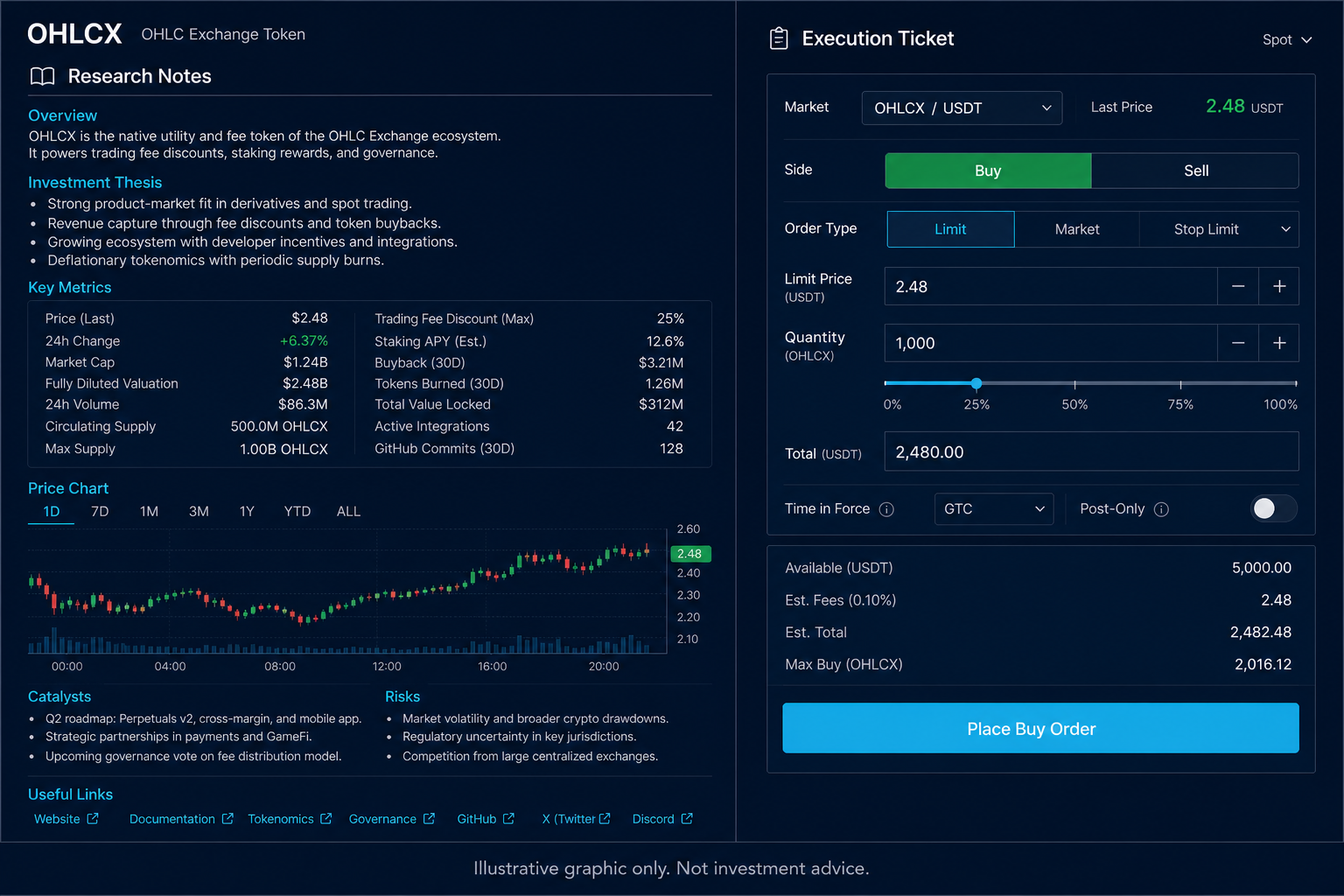
Research can be messy. The order ticket cannot. A trader can compare timeframes, read headlines, scan watchlists, check options flow, revisit market context, and think through several possible outcomes before deciding whether a setup is worth taking. That part of the workflow has room for uncertainty because the trade is still being evaluated.
The order ticket is different. By the time an order is being built, the workflow needs less interpretation and more alignment. Symbol, side, quantity, order type, entry, stop, target, time-in-force, exit logic, and account risk all need to match the plan.
That is where the handoff matters. A trader can do good research and still send a weak order if the final ticket reflects distraction, stale information, or a half-finished change in thesis. The issue is not that traders should ignore new information. The issue is that new information should not casually rewrite the ticket while the order is being built.
OHLCX fits into this part of the workflow. It does not tell traders what to trade. It gives traders a structured place to turn their own plan into order logic, exit flows, risk review, and optional automation before the order goes live.
Where does the handoff break down?
The handoff breaks down when the trader moves from analysis to execution without changing modes. During research, the question is, “Is this setup worth taking?” During execution, the question is, “Does this order match the setup I already decided to take?” Those questions are related, but they are not the same.
When they get mixed together, the ticket can start to reflect pieces of different decisions. A headline changes confidence, but the stop does not get updated. A chart from a different timeframe influences the entry. A message interrupts the send process, and the trader returns to the ticket without fully rechecking quantity or exit logic.
The mistakes do not always look dramatic. They can show up as a stale limit price, a stop placed around the wrong invalidation point, an exit path that no longer fits the position, or a trade that is larger than the account risk actually supports. A strong thesis can still become a bad order if the handoff is messy.
What should be decided before the ticket is built?
Before the order ticket is built, the trader should know what the trade is supposed to be. That does not mean predicting the outcome. It means knowing the setup, the invalidation point, the size, the intended exit path, and the conditions that would make the trade a no-send.
A useful pre-ticket check can be simple:
- What is the setup?
- Where is the trade wrong?
- What size fits the account?
- What exit path belongs with the trade?
- Is this a full exit, partial exit, staged exit, or trailing protection setup?
- What would make this trade no longer worth sending?
If those answers are still changing, the trader is probably still in research mode. That is fine. But the ticket should wait.
This is the distinction OHLCX is built to support. Research can happen across charts, news, notes, and watchlists. Once the trader moves into execution, the order path should become more structured, visible, and easier to verify.
What belongs in the order ticket?
The order ticket should contain enough information to confirm the trade, not enough noise to reopen the entire research process. A trader still needs to respect risk events. If an earnings release, macro print, Fed headline, or liquidity change invalidates the setup, the trade should be reviewed. But that is different from reading one more headline while editing size, widening a stop, or changing the target.
For example, if a new headline changes the thesis while the order is being built, the answer is not to casually widen the stop or shrink the target mid-ticket. The cleaner move is to pause, reassess the setup, and rebuild the order only if the trade still belongs.
Trying to interpret new information halfway through the ticket is where confusion enters. The trader may not fully cancel the old plan or fully build the new one. The result can be an order that reflects neither decision cleanly. A simple rule helps: if the thesis changes, stop editing the ticket and rebuild the plan.
How OHLCX supports a cleaner handoff
OHLCX supports this handoff by giving traders a structured place to turn a researched idea into order logic. The platform is not replacing judgment. It is helping the trader carry that judgment into the ticket with less last-second reconstruction. The trader still decides whether the setup is valid, how much risk to take, and whether the order should be sent.
Structured order entry helps make the order path easier to verify before the trade is live. Exit flows such as OCO, OTOCO, TRIM, TRIMMER, and TSP can support different exit plans when they fit the setup. Risk Gauge helps keep account-level risk visible before adding exposure, so the trader is not only looking at the chart in isolation.
That matters because the handoff from research to order entry is where details often get lost. The setup may be clear in the trader’s head, but the ticket still has to reflect the right symbol, size, entry, stop, target, and exit path.
Strategy Builder can also help when the setup is repeatable. If the trader already has a recurring order path, a no-code automation template can reduce the need to rebuild the same structure manually under pressure. The trader still decides whether the setup fits the current market. Automation should support the plan, not outrun it.
Use a pre-send check
A pre-send check is a short pause before the order goes live. It should not be heavy. It should be specific enough to catch the mistakes that happen when research, alerts, account risk, and order entry compete for attention.
For active traders, the check can include:
- Correct account and connection status
- Correct symbol and side
- Quantity and position size
- Order type, entry price, and time-in-force
- Stop or invalidation level
- Target, partial exit, staged exit, or trailing logic
- Existing exposure in the same theme
- Working orders or open positions that may conflict
- Any unresolved research item that should pause the send
This kind of check is not about slowing the trader down for no reason. It creates a cleaner boundary between deciding on the trade and sending the order.
It is especially useful when the trader has been moving between charts, news, messages, mobile screens, or multiple open positions. The more inputs competing for attention, the more important the final verification becomes.
Do not let alerts rewrite the ticket
Alerts, messages, and headlines can be useful. They should not casually rewrite the order. A trader may check a position, glance at a message, or see a headline during the session. That does not mean the ticket should be changed immediately. If the new information matters, it should trigger a deliberate review, not an impulsive edit.
This is especially true for protective logic. Changing size, widening a stop, or removing a partial exit because of an alert may change the risk profile without fully rebuilding the plan. That is not agility. It is a broken handoff.
The cleaner habit is to decide what each input is for. Research sources help the trader understand the setup. Alerts tell the trader when something may need attention. The order ticket is where the trader confirms a specific action. Those roles should not blur in the final moments before send.
Was it a bad setup or a bad handoff?
Post-trade review should not only ask whether the idea was good. Sometimes the issue is not the setup. It is the environment around the order. The trader may have been interrupted, rushed, switching between windows, reacting to a headline, or managing another position while building the ticket.
That distinction matters because the fix is different. A weak setup needs better research. A strong setup with a sloppy ticket needs a better handoff. A repeated mistake around partial exits may need a clearer exit workflow. A repeated mistake after alerts may need a cleaner boundary before send.
A simple review can look for patterns:
- Did the mistake happen after a headline, alert, or interruption?
- Did the trader change size, stop, or target during ticket entry?
- Was the order built from the right timeframe and current price?
- Did the exit logic still match the live position after fills or partial fills?
- Did the trader check risk before send, or only after the order was live?
The goal is not to create paperwork. It is to understand whether the problem came from the trade idea or from the way the order was built.
Make the handoff deliberate
Research should help the trader decide what is worth doing. The order ticket should help the trader do it accurately. When those phases mix too much, the trader can end up with a ticket that reflects doubt, speed, distraction, or a half-finished change in thesis. That is where execution mistakes creep in.
OHLCX supports a more deliberate handoff by helping traders work from structured order entry, exit flows, optional automation, and risk visibility in one execution-focused workflow. Traders can connect through Schwab, keep capital and custody with Schwab, and use OHLCX as the middle layer between the plan and the live order.
The goal is not to remove judgment. The goal is to protect the moment when judgment turns into an order.
Clear research. Clean ticket. Verified send.
To see how OHLCX supports structured execution workflows, request access through the OHLCX contact page.
Leave a Reply