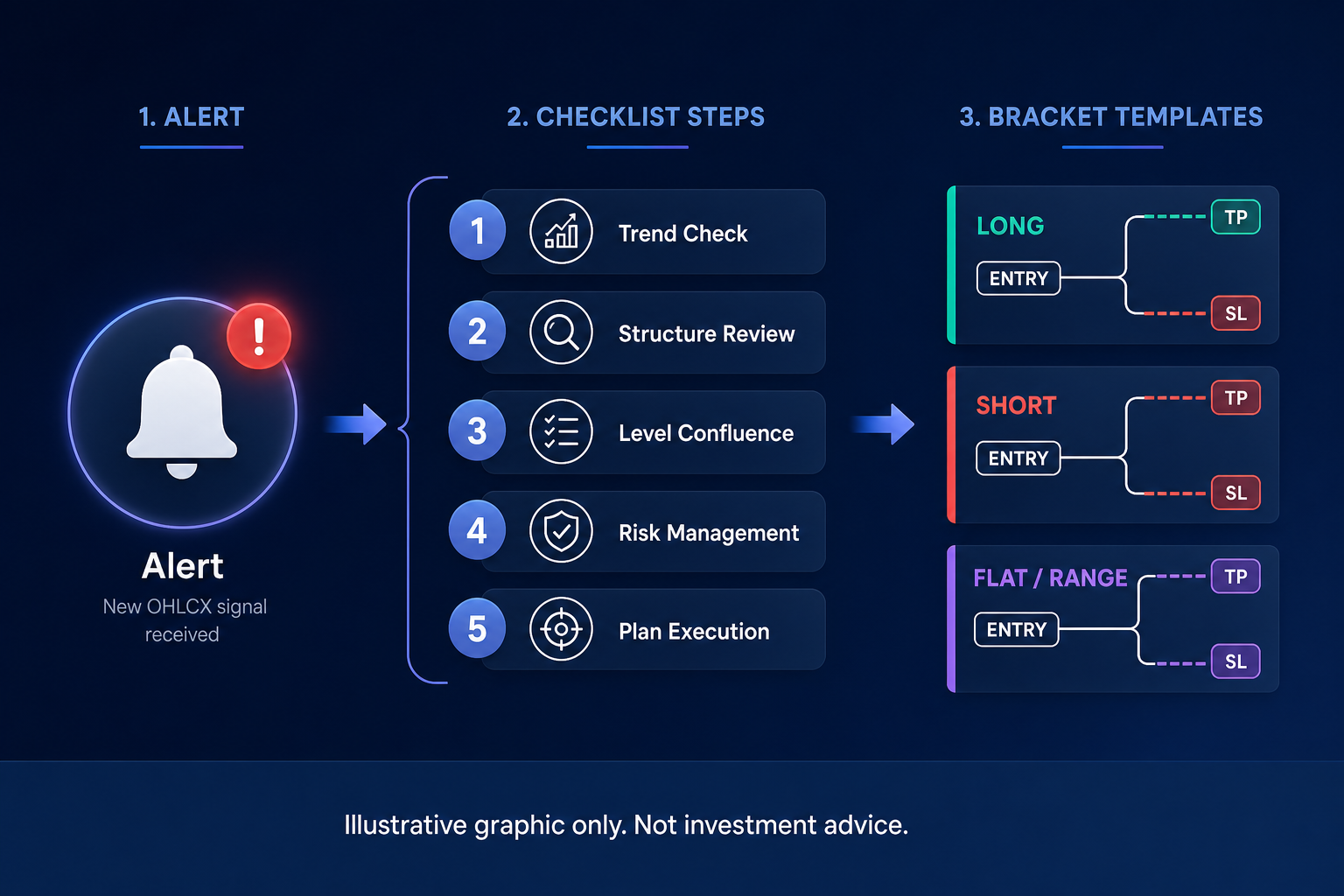
An alert that only says “look” outsources thinking to your worst late-day self. It fires at the exact moments when improvising is most expensive, then hands you a blank decision under time pressure. Repeatable alerts deserve repeatable responses: a written trigger, a finite set of actions, preset size, and a clock. That is the difference between a notification center and infrastructure.
The playbook is where that difference lives. It does not need to be elaborate. It needs to be finished before the alert fires, because the version of you reading the ping is not the version of you who should be designing the response.
Start from recurrence, not excitement
Not every alert deserves a playbook. If an alert fires often but rarely changes a ticket, it is entertainment. If it fires rarely but always matters, it is a candidate. Rank candidates by frequency times consequence, and ignore how clever the alert felt when you built it.
Then work narrow. Review last month’s alerts, delete or mute the long tail that never produced a trade, and promote two or three into written playbooks. Depth beats breadth here, and keep a retirement list alongside the promotion list: an alert that helped in one regime and misfires in this one deserves deletion more than tuning.
What belongs in every alert playbook?
Six elements, and without all six you still have vibes dressed as process:
- Trigger definition: Observable and measurable, not a feeling about momentum
- Allowed actions: The finite set of trades this alert can produce
- Forbidden actions: The improvisations this alert does not license
- Default size: A percent of normal size, respecting your exposure caps
- Validity window: How long the signal stays actionable before it expires
- Invalidation: What kills the trade idea even if price prints the trigger
Hold the whole thing to one page. If it will not fit, you are writing two playbooks and should split them.
Write triggers you can measure
Playbooks fail in two directions. Over-specified ones die the first time liquidity shifts, and under-specified ones are poetry. The fix for both is anchoring to numbers you can observe: a spread cap, a time window, a relative volume threshold, rather than adjectives like “strong” or “clean.” If the same template is stretching across very different names, split it, because a large-cap version and a small-cap version usually differ more than the template admits. And when volatility changes enough that the same share count implies different dollar risk, maintain separate parameter sets for calmer and expanded conditions rather than letting one template quietly lie about heat.
Keep a human veto in the loop
Every playbook should name the conditions under which it stops: a macro shock, a halt, a heat breach from positions the alert knows nothing about, a headline that contradicts the catalyst thesis. Automation can prepare a repeatable response, but the playbook should state when manual review takes over. Write the veto examples concretely, because “use judgment” is not an instruction under stress, but “two consecutive one-tick fakeouts means stand down” is. An alert playbook that never contemplates its own veto will eventually execute a mistake with perfect discipline.
How do you test a new playbook safely?
Walk the steps once on paper to find the hidden friction, then run it live at minimum size for a defined sample, logging how well each ticket matched the written response. Score those tickets independently of P&L during the trial, because a playbook that loses money can still be correct process, and a playbook that wins with poor-quality tickets is hazardous. Promote size only after the ticket quality stabilizes, not after the first lucky print.
Maintain, date, and delete
Playbooks multiply faster than discipline, so review monthly with a bias toward deletion. Date each one. Check whether spreads have made old limit rules meaningless, whether the trigger drifted relative to current volatility, and whether two alerts that tend to fire together are quietly double-stacking exposure that each playbook counts only once. Sunset what misfires more than it helps. Nostalgia is expensive.
How OHLCX fits an alert playbook
A playbook is only as good as its path to a live order, and that is where OHLCX fits. Structured order entry with persistent defaults lets the response live as ticket structure instead of heroic typing under time pressure. Exits like OCO, TSP, and TRIM can be selected before the order goes live, so the playbook’s exit rules become part of the order logic rather than a separate follow-up task. The expiry order time limit can put the validity window on the order itself, so a triggered entry does not linger past the window the playbook allowed. Risk Gauge visibility supports the size-versus-exposure check the playbook header calls for, and the order history, with timestamps on orders and fills, gives the trial-period review a record to score tickets against. For stable, clearly defined playbooks, Strategy Builder can support no-code, rule-based automation using conditions the trader defines. The playbook should also state when the workflow returns to manual review. OHLCX does not decide which alerts deserve capital. It gives a finished playbook a structured way to become an order.
Alerts should arrive with the next move attached
An alert is a question, and a playbook is the answer you wrote while you were still clear-headed. Rank the alerts that matter, give each survivor its six elements and one page, test at small size, and delete generously. Request access to OHLCX to see how a written playbook can live as order structure: exits chosen up front, validity windows on the order, and a record of how each response actually executed.
Leave a Reply