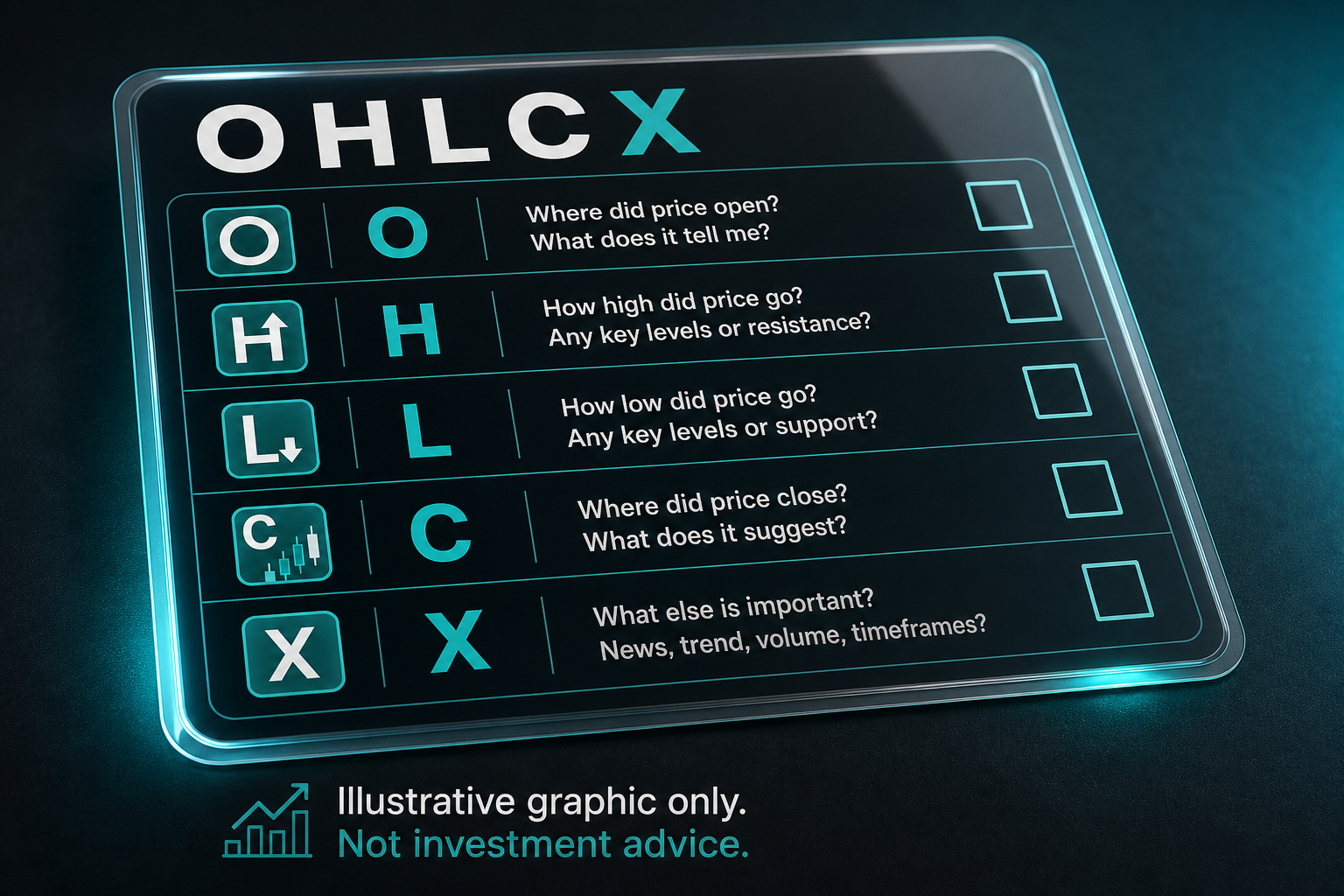
Institutions do not use checklists because traders lack intelligence. They use them because complexity and time pressure create predictable mistakes.
Retail and active traders face the same problem, usually with fewer people around to catch the slip. A symbol can be right while the side is wrong. The setup can be strong while the size is too large. The stop can make sense in theory but fail to match the actual order being sent. A partial fill can change the remaining position while the attached exits still need another look.
A short checklist does not make trading mechanical. It makes the send moment more accountable.
That matters because the final step before an order goes live is not the same as research. It is the point where a trader’s idea becomes a live instruction. The goal is not to slow every trade down. The goal is to catch the errors that speed, confidence, fatigue, and market pressure make easier to miss.
OHLCX fits into this workflow because it is built around structured execution. Traders connect through Schwab, keep capital and custody with Schwab, and use OHLCX to build orders, review exits, check risk, and send with more clarity. A checklist belongs naturally in that process.
Why do traders need a pre-send checklist?
A pre-send checklist is useful because most execution mistakes are not caused by a lack of market knowledge.
They happen in the gap between what the trader meant to do and what the ticket actually says. That gap can be small, but it matters. The wrong quantity, stale limit price, missing stop, mismatched exit logic, or incorrect time-in-force can change the trade before the market ever has a chance to prove the thesis right or wrong.
A checklist gives the trader a short, repeatable way to ask: does this order match the plan?
That question is simple, but it covers a lot. It forces the trader to check account, symbol, side, size, entry, protection, target, exit structure, and risk before the order becomes live. It also creates a pause when something feels rushed or unclear.
The checklist is not there to create paperwork. It is there to catch asymmetric mistakes, where a few unchecked seconds can create a much larger problem.
What belongs on a trading checklist?
Only items that catch real mistakes belong on the checklist.
A useful checklist should not become a long list of things the trader will ignore under pressure. It should focus on the details that can create real execution risk if they are wrong.
A practical pre-send checklist can include:
- Correct account and active Schwab connection
- Correct symbol and side
- Quantity and position size
- Order type, entry price, and time-in-force
- Stop, invalidation level, or protective logic
- Target, partial exit, staged exit, or trailing plan
- Whether OCO or OTOCO logic is needed
- Existing positions or working orders that may conflict
- Portfolio exposure or theme overlap
- Any unresolved alert, headline, reconnect issue, or red banner that should pause the send
The checklist should also match the way the trader actually trades. A trader using simple directional entries may need a shorter list. A trader using attached exits, staged profit-taking, or automation may need more specific checks.
The standard is not “include everything.” The standard is “include what would matter if it were wrong.”
When should the checklist be full instead of quick?
Not every order needs the same level of review.
A full checklist makes sense before the first trade of the day, after a reconnect, after a platform or connection interruption, before a larger position, before an automation run, or before a trade with multiple attached exits. It also belongs around high-volatility windows, such as earnings, major economic releases, Fed-related headlines, opens, and closes.
A quick checklist can work for smaller, policy-identical orders when the trader has already completed a full review recently and market conditions have not changed materially. Even then, the quick version should still confirm the basics: account, symbol, side, size, protection, and whether the trade still fits the plan.
The danger is pretending a rushed glance is a checklist. It is not.
A checklist should be light enough to use, but clear enough to stop the trader when the order no longer matches the setup.
How OHLCX supports the checklist habit
OHLCX does not replace the checklist. It gives the trader a better place to run it.
Structured order entry helps make the order path easier to review before the trade is live. Instead of rebuilding the plan across notes, charts, broker screens, and memory, the trader can bring more of the order logic into one execution workflow.
That is where OHLCX features can support the habit. OCO and OTOCO logic can help keep related entry, stop, and target decisions connected. TRIM, TRIMMER, and TSP-style exits can support partial exits, staged profit-taking, or protective logic when those fit the setup. Risk Gauge helps the trader check whether the next order fits the account, not just the chart.
Strategy Builder can also help when the setup is repeatable. If the trader already has a defined order path, a no-code automation template can reduce manual rebuilding. But the checklist still matters. The trader should confirm the template, parameters, connection state, risk, and send decision before automation carries the plan forward.
The product point is simple: OHLCX helps make the order more reviewable before it becomes live.
What should be checked after the order is sent?
The checklist should not end the second the order is submitted.
After send, the trader should confirm what actually happened. The order may be acknowledged, partially filled, still working, rejected, or changed by market conditions. If attached exits are involved, the trader needs to verify that the protective and profit-taking logic still matches the live position.
A short post-send check can include:
- Was the order accepted or rejected?
- Did it fill fully, partially, or not at all?
- Do working exits match the live position size?
- Are stops, targets, or staged exits still aligned?
- Did any partial fill change the remaining plan?
- Does account-level risk still fit the trader’s limits?
- Does anything need to be noted for review?
This is especially important after reconnects, fast moves, partial fills, or manual edits. A trader may think the plan is protected, but the live account has to confirm that.
The goal is not to stare at every order forever. The goal is to make sure the live state matches what the trader believes is live.
Was the mistake in the trade or the checklist?
Post-trade review should separate market problems from process problems.
A trade can lose money even if it was executed cleanly. That is part of trading. But if the loss was made worse by wrong size, a missed exit, a stale price, or a skipped connection check, the issue is not only the setup. It is the send process.
A simple review can ask:
- Did the checklist catch anything useful?
- Did the trader skip the checklist under pressure?
- Did a mistake happen after an alert, reconnect, or distraction?
- Did the order match the plan at the time it was sent?
- Did the exits match the position after fills or partial fills?
- Should one checklist line be added, removed, or rewritten?
That last question matters. Checklists should evolve from real near-misses, not from abstract fear. If an item never catches anything, remove it. If the same mistake happens twice, add a line that catches it.
A living checklist stays short because every line earns its place.
Keep the checklist simple enough to trust
The best checklist is not the longest one. It is the one the trader actually uses when the market is moving.
Too many lines create a different problem. The trader starts skipping the list or treating it like a ritual instead of a real review. Too few lines leave the same mistakes open. The balance is a checklist that catches the most important execution risks without turning order entry into a bureaucratic exercise.
The language should also match the workflow. If the trader checks “position size” in the platform, the checklist should say position size. If the trader uses exit flows, the checklist should name the exit flow. If Risk Gauge is part of the review, it should be part of the checklist.
A checklist works best when it follows the same sequence the trader uses to build and review the order.
Make the send moment deliberate
A pre-send checklist is not about trading slower. It is about sending cleaner orders.
The trader still owns the setup, the risk, the exit plan, and the final decision. The checklist simply makes the final handoff more deliberate before the order becomes live.
OHLCX supports that kind of execution workflow. Traders can connect through Schwab, keep capital and custody with Schwab, and use OHLCX as the middle layer where structured order entry, exit flows, optional automation, and risk visibility come together before send.
Speed matters. But speed without verification can turn a good plan into a sloppy order. Check the account. Check the risk. Check the exits. Then send.
To see how OHLCX supports structured execution workflows, request access through the OHLCX contact page.
Leave a Reply