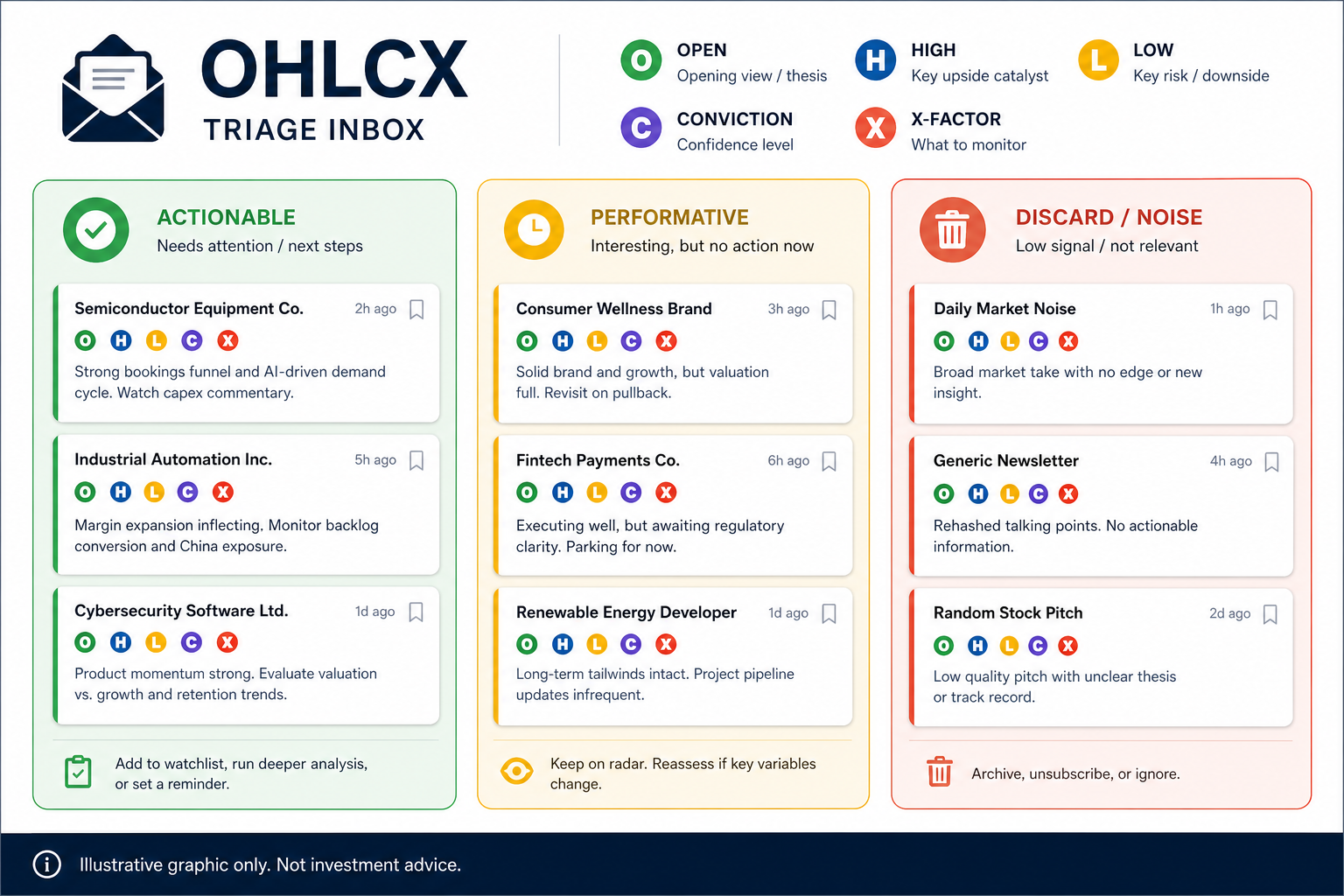
Social media can make every trade feel like it belongs to everyone. A chart shows up at the right moment. A trader sounds confident. The comments are moving fast. One person says buy, another says sell, and both sound like they know exactly what they are doing.
That is the problem. Online trading content often arrives without the context that makes the trade make sense. You usually do not know the trader’s account size, cost basis, timeframe, risk tolerance, open exposure, liquidity needs, hedge, tax situation, or exit plan.
Their trade may be valid for them and still be wrong for you.
That does not make social media useless. It can be useful for discovery, community, sentiment, catalysts, and research prompts. But it should not replace the trading plan. The feed can show you what other people are watching. It cannot decide what belongs in your account.
The concern is not theoretical. FINRA’s 2025 investor research found that 26% of investors use recommendations from social media influencers when making investment decisions, including 61% of investors under 35. FINRA’s 2026 research also found that social media users and finfluencer followers often show a confidence gap: they averaged 42% on objective investing knowledge questions, while 63% rated their investing knowledge as high.
Attention is not the same thing as conviction. Barber and Odean’s research found that individual investors are net buyers of attention-grabbing stocks, including stocks in the news, stocks with high abnormal trading volume, and stocks with extreme one-day returns. A loud idea may be worth reviewing. It is not automatically worth trading.
The CFTC puts the discipline plainly: it is better to develop your own trading plan for your own situation and risk tolerance than to follow others.
That is the point of this blog. Social media can inform the trader. It should not become the trader.
Not everyone online is trading the same trade
Two traders can talk about the same ticker and mean completely different things.
One may be scalping a five-minute move. Another may be building a swing position over several weeks. One may already have a cost basis far below the current price. Another may be trading options with defined premium risk. Someone else may be hedged, reducing exposure, or posting about a position that is already mostly paid for.
From the outside, all of that can get flattened into one word: buy, sell, hold, short, trim.
Those words are incomplete without context. “Buy” means very little without size, timeframe, invalidation, target, and current exposure. “Sell” means very little without knowing whether the trader is taking profit, cutting risk, hedging, shorting, or simply managing a different plan.
That is why copying a call is dangerous. You may be borrowing the conclusion without borrowing the conditions that made it reasonable.
Social media can help you find ideas, not decide for you
The useful role of social media is discovery.
A good post can point you toward a name you missed, a catalyst worth checking, a chart level that deserves attention, or a market theme you should understand. Community can also be valuable. Experienced traders can make you ask better questions, and strong research can send you back to the desk with something worth reviewing.
But discovery is not decision-making.
A post can earn a place in your research queue without earning a place in your order ticket. The feed can say, “Look here.” Your plan has to decide whether the trade fits your account.
That means the next step after seeing a good idea is not automatically execution. It is translation. What is the setup in your words? What would make it wrong? What size fits your account? What does it add to the rest of your book? What exit logic would you use if the entry filled?
Until those questions are answered, the idea is still research.
Borrowed conviction breaks the plan
Borrowed conviction is what happens when someone else’s confidence starts doing the work your plan is supposed to do.
It usually does not feel reckless in the moment. It feels informed. The trader has a strong thread, a clean chart, a crowd reacting, and a voice saying the move still has room.
The financial risk shows up later. The position is too large. The stop is vague. The exit keeps moving because the original poster is still bullish. A trade meant for a quick move becomes a swing because the loss is uncomfortable. A stock idea becomes an options trade because the comments made the leverage look obvious.
That is not conviction. That is someone else’s urgency leaking into your account.
Real conviction is not loud. It is specific. It knows the size, invalidation, timeframe, liquidity standard, exit logic, and maximum damage before the order goes live.
A good idea can still be wrong for your account
A trade idea does not have to be bad to be a bad fit.
The thesis may be strong, but the spread may be too wide. The chart may be clean, but the entry may already be late. The catalyst may be real, but the trade may add the same sector, beta, volatility, or macro exposure you already have.
Account size matters too. A trade that is manageable in one account can be oversized in another. A drawdown that one trader can tolerate may force another trader into bad decisions. An options position that works for someone with defined premium risk may not translate cleanly to common stock, margin exposure, or a different expiration.
That is why “Should I take this trade?” is not enough.
The better question is: “Does this trade fit my plan, my account, and my risk right now?”
If the answer is no, passing is not weakness. It is execution discipline.
What should you check before acting on a social signal?
Before a social idea reaches the ticket, it should pass through your own plan.
Use a simple check:
- Timeframe: Is this a scalp, day trade, swing, event trade, or longer hold?
- Trigger: What exact condition makes the trade active?
- Invalidation: Where is the idea wrong?
- Size: How many shares or contracts fit the account and the risk budget?
- Liquidity: Is the spread, depth, options width, or expected fill quality acceptable?
- Exposure: Does this duplicate a position, sector, theme, or macro driver already in the book?
- Exit logic: What happens after entry, including stop, target, partials, time-in-force, or review point?
If the idea cannot survive those checks, it does not belong in the ticket yet. It may still be worth saving. It may still be worth researching. But it has not earned capital.
That is the difference between using social media and being used by it.
Keep the community, but protect the ticket
The answer is not to delete every app or pretend useful trading conversations do not happen online.
The better answer is to define where the feed belongs. Social media can belong in idea discovery, market awareness, research collection, and community. It should not be allowed to bypass the trading plan.
That means saved posts need dates and notes, not just screenshots. Trade ideas need triggers and invalidation, not just likes. Sources should be reviewed like inputs, not treated like personalities.
If an account regularly creates urgency without clear risk, sizing, or timeframe, it may still be interesting. It may even be entertaining. But it should not sit close to your execution process.
A source does not need to be fraudulent to be bad for your trading. It only needs to make you less clear when capital is at risk.
How OHLCX supports your plan, not the feed
OHLCX does not verify social content, rank creators, interpret sentiment, or decide which ideas deserve capital. It is not a recommendation engine, and the trading decision stays with the user.
What OHLCX can support is the step after an idea survives the trader’s own filter. OHLCX is broker-connected execution technology built around the space between a trader’s plan and the broker order. It helps users turn a defined plan into executable order logic while capital and custody remain with Schwab.
Asset Detail can bring chart context, options data, Level 2 order book information, current positions, and the order ticket closer together for the instrument being reviewed. Risk Gauge visibility gives the trader a clearer reference point for whether the idea fits current exposure before adding another position tied to the same theme.
Structured order entry helps turn the idea into defined order logic instead of an improvised click. Exits like OCO, OTOCO, TSP, TRIM, and TRIMMER can be selected before the order goes live, so a social idea does not become an entry-only trade with the exit left for later. The trader still determines the setup, sizing, order structure, and exit inputs.
Order history and timestamps give the trader a record to compare against the original idea and the planned trigger. That review matters because the lesson is not only whether the person online was right. It is whether the trade fit your account, followed your plan, and produced a ticket you would be willing to repeat.
OHLCX helps structure the path from idea to order. It does not make the feed smarter, and it does not make someone else’s trade yours.
Trade with conviction, but make sure it is yours
Social media can be a radar. It should not be the throttle.
Use the feed to find ideas, themes, and questions worth reviewing. Then bring every idea back to your own plan: your timeframe, your size, your risk, your liquidity, your exposure, and your exits.
The best question is not, “Is this person right?” The better question is, “Does this trade belong in my book?”
Trade with conviction, but do not borrow it from the feed. Conviction should come from a plan you understand, a risk level you accept, and an order structure you are prepared to manage.
Request access to OHLCX to see how structured order entry, visible risk context, predefined exits, and reviewable order history can help keep social-sourced ideas inside your own execution plan.
Leave a Reply